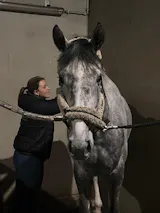
Osteopathy
Osteopathy focuses on restoring freedom of movement in the joints, muscles and connective tissues. Everything in the body is connected: a limitation in one place can affect the entire horse. Osteopathy helps to resolve these limitations, allowing the body to function optimally again.
When is it suitable?
Ideal for back problems, stiffness, asymmetry in movement, problems with bending or lateral movements and reduced performance.

Massage
Massage involves manipulating the soft tissues, such as muscles, tendons and ligaments, to improve circulation, reduce muscle tension and promote overall relaxation.
When is it suitable?
Perfect for sports horses, after intensive training or for tense muscles. But also preventative to avoid injuries
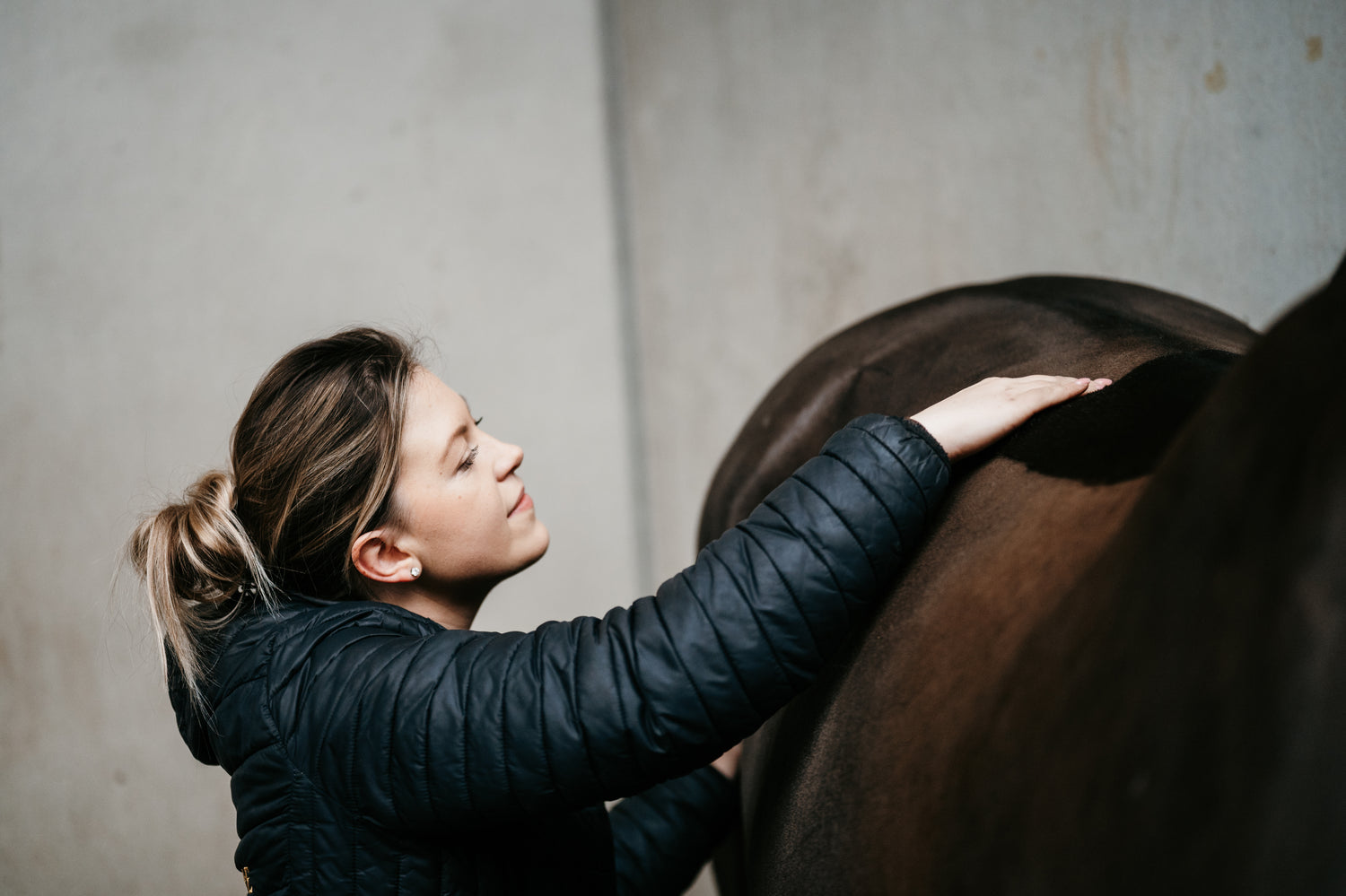
Shiatsu
Shiatsu originates from Japan and focuses on restoring the energy balance in the body by applying pressure to specific points and meridians.
When is it suitable?
For stress, muscle pain, digestive problems, skin problems and allergies
Recovery from injuries
Hormonal problems
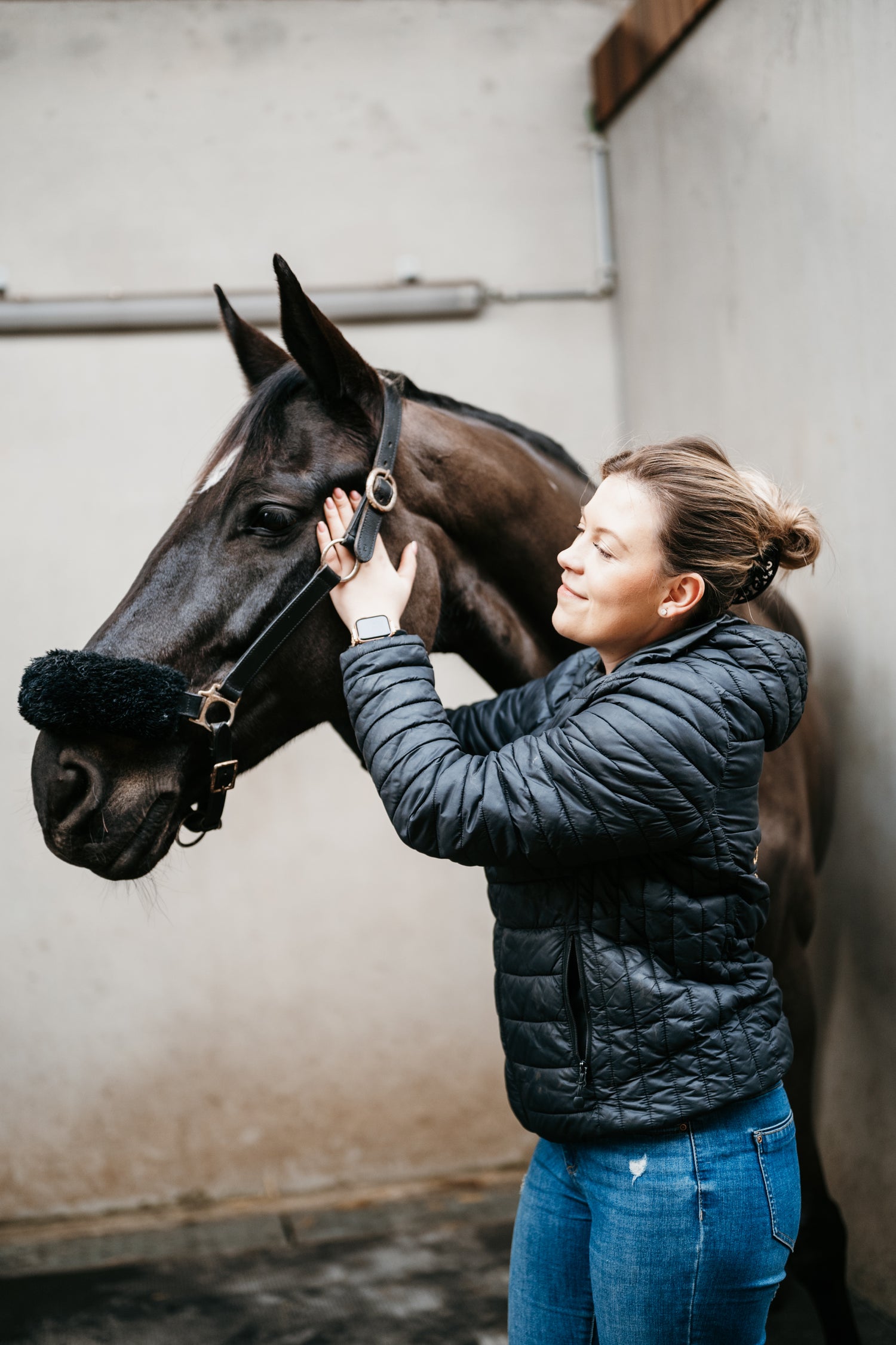
CranioSacral Therapy
Craniosacral therapy is a gentle technique that works with the cerebrospinal fluid. This flows from the skull to the sacrum.
The aim is to correct limitations in this movement
It brings deep relaxation and helps the nervous system to function better, which promotes both physical and mental recovery.
When is it suitable?
Ideal for headaches, tension, behavioral problems or injuries to the head, neck and back.

Hirudo Therapy / Leech Therapy
During a treatment, medicinal leeches are applied to carefully chosen places on the horse's body. Various substances are released through their saliva. These have, among other things, an anti-inflammatory effect and support local blood circulation. The subsequent controlled post-bleeding also contributes to the effect of the treatment.
Due to these properties, leech therapy can be a valuable additional support in the recovery from various ailments and injuries. In practice, leech therapy is used for local inflammatory reactions, swellings, problems around tendons and joints, osteoarthritis, navicular syndrome, kissing spines, mud fever, and certain problems with wound healing.
Which application is appropriate always depends on the cause, the horse's condition, and the specific situation. Therefore, hirudo therapy for medical conditions is only applied after a diagnosis and/or on the advice of the treating veterinarian. The therapy is complementary and does not replace a veterinary diagnosis or treatment.

Anamnesis-Intake & Interview
Each treatment starts with an extensive interview to get a good picture of the horse and possible complaints. The following aspects are discussed:
✅ Current complaints and performance reduction.
✅ Medical history and previous treatments.
✅ Training intensity, working conditions and management.
✅ Diet and housing.
If, based on this information, there is a suspicion of a more serious condition, the horse will first be referred to a veterinarian.
Static Inspection - Posture & Body Analysis
The horse is observed at rest to gain insight into:
🔹 Posture and weight distribution.
🔹 Muscle development and any asymmetries.
🔹 Swelling, warmth or other external characteristics that may indicate problems.
Dynamic Evaluation Motion Analysis
The horse is judged in movement at walk and trot, both in a straight line and on a circle. In some cases, an assessment under saddle may be necessary.
Attention is paid to:
🔸 Gait pattern and movement quality.
🔸 Overcompensation or limited range of motion.
🔸 Any irregularities or asymmetries.
If obvious lameness is found that has not previously been assessed by a veterinarian, the horse will not be treated and will be referred first.
Palpation & Functional examination
By means of thorough palpation , various structures of the horse are examined:
✔ Muscle tension, trigger points and adhesions.
✔ Sensitive or painful areas.
✔ Heat differences or swelling.
✔ Mobility and flexibility of joints and tissues.
Therapeutic Intervention Treatment Techniques
Based on the findings from the research, an appropriate treatment strategy is applied. Because every horse is unique, a combination of techniques is usually applied. This way, every treatment is tailor-made for the needs of the horse.
Evaluation Advice Guidance
After the treatment the owner receives a personal advice plan , tailored to the findings and needs of the horse. This can consist of:
✅ Targeted exercises and rehabilitation advice.
✅ Stretching routines and warm-up/cool-down recommendations.
✅ Any adjustments in training, nutrition or management.
✅ A treatment plan for any follow-up sessions.
The aim is not only to treat the horse, but also to provide the owner with tools to support the horse's recovery process and performance.

The power lies in the combination
In addition to osteopathy, massage, shiatsu, and craniosacral therapy, I utilize a wide range of complementary techniques, including hirudotherapy (medicinal leeches), manual lymphatic drainage, and the use of a massage gun. I also integrate Centropix Kloud and Equine America supplements into my treatments. This creates a comprehensive approach tailored to the unique needs of each horse.
"True progress happens when horse, owner, and therapist work as one."

Not sure which treatment is right for your horse?
Contact us via the contact form and choose 'Manual Therapy'. At CDW Equicare, each treatment is specifically tailored to the horse's needs. So we look together at what is needed.
Price list
Let customers speak for us
Na jarenlang sukkelen met artrose en hernia's deze een weekje geprobeerd. En sinds jaren pijnvrij. Wat een zalig produkt. Ik ben alvast enorme fan 🥰

Zeer tevreden van Caitlin en haar behandelingen en expertise. Ze gaat professioneel te werk en staat open voor alle vragen en denkt goed mee voor oplossingen te vinden voor allerlei problemen! Ook communicatie verloopt zeer vlot. Ik merk elke keer duidelijk een verschil bij mijn paard als Caitlin is langs geweest, een echte aanrader!
Cailtin is heel rustig en heeft veel geduld ze gaat goed met de paarden om waardoor ze echt tot rust komen en dat levert goede resultaten op! Echt een aanrader!

Caithlin komt al een lange tijd voor mijn paard.
En ik kan maar niet genoeg zeggen wat een top madam ze is! Mijn paard en ik zijn echt zeer tevreden van haar werk, begeleiding en ondersteuning.
Geen enkele vraag is te veel. Ze heeft een luisterend oor en geeft het nodige advies dat voor u paard en uzelf werkt.
Ze heeft haar hart op de juiste plaats en ook enorm veel passie voor wat ze doet.
Ik raad haar 1000% aan ze is een krak in haar vak
Caitlin komt momenteel al een hele lange tijd voor mijn paarden.
En ik kan maar niet genoeg zeggen wat een top madam ze is! De paarden en ik zijn echt zeer tevreden van haar werk, begeleiding en ondersteuning.
Geen enkele vraag is te veel. Ze heeft een luisterend oor en geeft het nodige advies dat voor u paard en uzelf werkt.
Ze heeft haar hart op de juiste plaats en ook enorm veel passie voor wat ze doet.
Ik raad haar 1000% aan ❤️